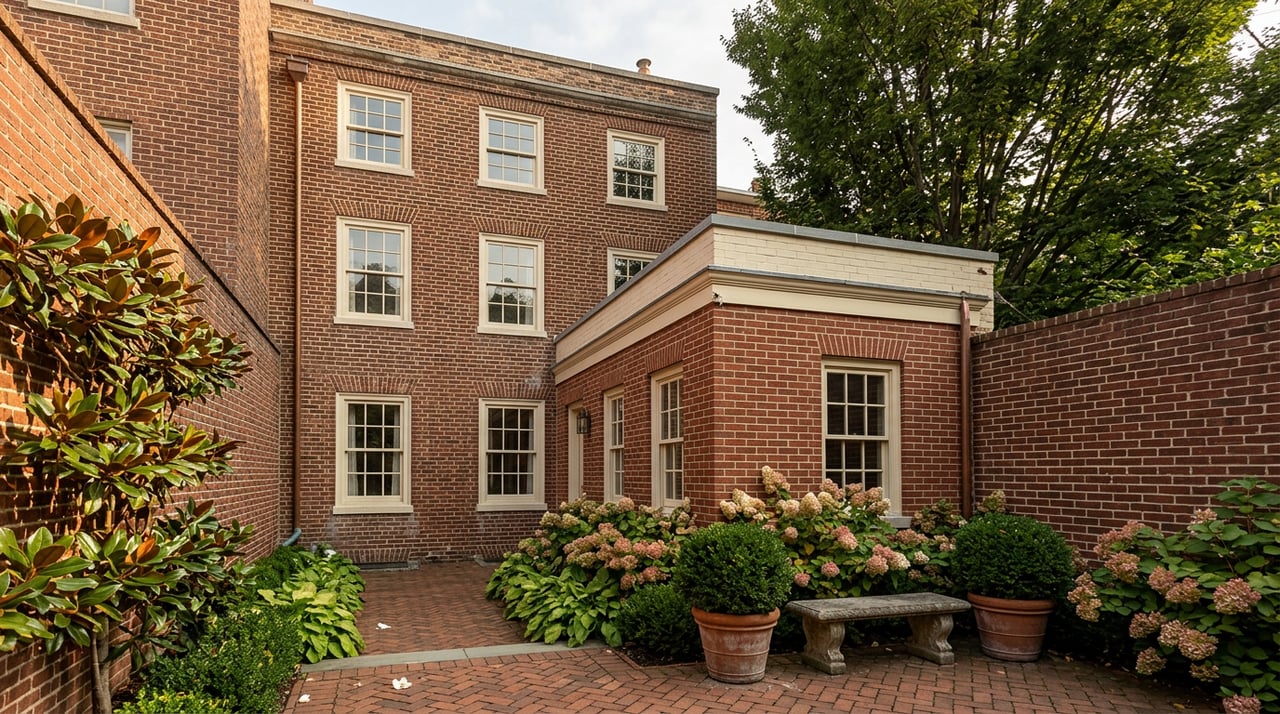
Capitol Hill Rowhouses Sell in 12 Days. The Roof Deck Before That Can Take a Year.
August 20, 2026
August 20, 2026
A well-priced rowhouse in Capitol Hill rarely sits. Recent rowhouse-specific sales figures for the neighborhood show a median of around 12 days from listing to contract, with sellers collecting roughly 98.5 percent of their original asking price once a home hits the market in good condition. In a neighborhood built out on a fixed, historically protected supply of Federal and Victorian rowhouses, the sale itself is often the easiest part of the whole process.
The renovation that comes before the sale runs on a completely different clock. A rooftop deck, a rear addition, or even a window swap visible from the street doesn't answer to buyer demand. It answers to the DC Historic Preservation Review Board, and one detail about the project determines whether that review takes a few weeks or most of a year.
Capitol Hill sits inside the largest locally designated historic district in DC, protected since 1976, built mostly of rowhouses dating from 1870 to 1920. That designation means most exterior work, from a new window to a full addition, gets an extra layer of review before the DC Department of Buildings will issue a permit. For a seller planning to spruce up a property before listing, this creates two separate timelines that rarely move at the same speed.
One clock is the market. Once a rowhouse is priced right, staged, and on the multiple listing service, buyers move fast. The other clock is historic review, and depending on the project, it can finish before the paint dries or still be running when the following spring's listing season opens. Here is roughly how the review clock breaks down by project type, based on guidance from DC's own preservation office and contractors who work in the district regularly:
| Project type | Review path | Typical timeline |
|---|---|---|
| Rear repair, in-kind window replacement, repointing not visible from the street | HPO staff review (Expedited Review) | A few weeks to about two months |
| Roof deck or addition visible from a public street or alley | Full HPRB review, concept and final | Roughly two to four months for a straightforward case, six or more if contested |
| Addition or new construction that also requires zoning relief | HPRB plus Board of Zoning Adjustment | Six to twelve months from design to permit, sometimes longer |
The gap between the first row and the third row is the whole story. A seller who assumes every exterior project moves at staff-review speed can find themselves still waiting on approvals when they meant to be signing a listing agreement.
The single variable that sorts a project into the fast track or the slow one is visibility from a public street or alley. According to DC's Office of Planning, more than 95 percent of preservation cases in the District are cleared through HPO's Expedited Review process, meaning most projects on a rear elevation, tucked behind a party wall or out of sightline from the block, never reach a public hearing at all.
Roof decks are the exception that catches people off guard, because even though the work sits on top of the house rather than facing the sidewalk, DC's own guidance on rooftop additions states plainly that a roof deck visible from a street typically requires board review to judge its compatibility with the historic building and its surroundings. The Historic Preservation Review Board looks at the height of the addition relative to the building, the height of neighboring buildings, and what a person standing on the sidewalk or across the street would actually see.
Once a project crosses into that territory, the neighborhood's advisory neighborhood commissions and the Capitol Hill Restoration Society are routinely asked to comment, and their input can shape both the outcome and how long it takes to get there. A rear addition that is set back, subordinate in scale, and not visible from the front of the house tends to move through review far faster than a rooftop structure or anything that changes the primary facade.
Over the three months ending May 2026, the median sale price for a Capitol Hill home was $925,000, up 2.8 percent from the same period the year before, at a median of $596 per square foot. That kind of appreciation gives sellers a real incentive to finish an outdoor deck or add a bedroom before they list. But it also means the cost of getting the timeline wrong is higher than it looks on paper.
If the sale itself only takes about two weeks once a rowhouse is ready to show, then an eight to eleven month wait for a rooftop addition to clear design, historic review, and permitting is where nearly all of a seller's calendar risk actually sits. It isn't in finding a buyer. Broader neighborhood-level data that includes every listing, not just well-priced rowhouses, shows an average of around 41 days on market recently, up from 33 days the year before. That spread between a fast median and a slower average is the market's way of saying that delay in Capitol Hill real estate is rarely about buyer hesitation. It's almost always about inventory that wasn't ready, priced, or documented correctly the day it went live, which is exactly the risk an open-ended renovation timeline creates.
Transaction volume backs this up too. Roughly 220 homes sold in the neighborhood in May 2026, up from 194 a year earlier. More competition for buyer attention means less room to guess wrong on when a pre-listing project will actually be done.
Some owners look at an eight-month HPRB timeline and decide to build the roof deck first and sort out approvals later, or not at all. That choice follows the seller into the transaction. DC Code Chapter 13 requires sellers of one to four unit residential properties to disclose known defects and conditions in good faith, and the standard disclosure form specifically asks whether the seller knows of any zoning violations and whether the property carries historic designation, according to a legal summary of the statute. An "as is" sale does not remove that duty, and DC buyers cannot waive their right to receive the disclosure statement at all.
An unpermitted roof deck or addition built without HPRB sign-off is not just a risk while the seller still owns the house. If the seller has actual knowledge that exterior work went up without the required review, that is a fact the disclosure statute expects them to share, and it can surface during a title search or a buyer's due diligence long after the party is over.
Capitol Hill's rowhouse stock also includes plenty of English basement or garden units that owners rent out. If there is a tenant in that space at the time of sale, DC's Tenant Opportunity to Purchase Act layers its own notice and timing requirements on top of everything else, which means a seller juggling a renovation calendar and a tenant-occupied basement is really managing three clocks, not two.
Does every exterior repair need to go before the full Historic Preservation Review Board? No. Most in-kind repairs and repointing are cleared by HPO staff without a public hearing, since staff carry delegated authority to approve minor work. Full board review is reserved for additions, new construction, and anything with real visibility from a public street.
Can I sell my rowhouse while a historic preservation application is still pending? Yes, but be transparent with buyers about what's filed, what's approved, and what remains outstanding. Clear documentation of exactly where a project stands protects you and can protect your price too.
Is a rear addition automatically easier to approve than a roof deck? Often, yes, if it's subordinate in scale, set back from the rear property line, and not visible from the public street. Visibility, more than the type of project, tends to decide which review track a proposal lands on.
Timing a Capitol Hill sale around a historic review calendar is exactly the kind of detail that separates a smooth listing from a stalled one. If you're weighing a pre-sale renovation, or wondering whether to list now and let approved plans do the talking, the Robert & Tyler Team can walk through your specific rowhouse and timeline with you.
Stay up to date on the latest real estate trends.
A personalized strategy, proven marketing expertise, and a commitment to exceptional client service drive every transaction. With over $1.3 billion in career sales, the Robert & Tyler Team combines innovative marketing, skilled negotiation, and deep local market knowledge to help buyers and sellers achieve outstanding results throughout the Washington, DC region.
THE ROBERT & TYLER TEAM
Robert Crawford
[email protected] | 202.841.6170
Tyler Jeffrey
[email protected] | 202.746.2319
Abby Schulten
[email protected] | 203.293.3379
Elizabeth Mandle
[email protected] | 864.704.2965
Mike Favazzo
[email protected] | 970.710.1246
ADDRESS 5101 Wisconsin Avenue NW, Suite 100 Washington, DC 20016